

Podcast: Reproducir en una ventana nueva | Descargar
Suscribirse: Apple Podcasts | Amazon Music | Email | RSS
Podcast 427: Hierbas Súper Tónicas (antes Hierbas RDT)
Rehmannia Dean Thomas es un herbolario tónico taoísta de la línea Puerta de la Vida de 5000 años de antigüedad de China. Rehmannia se centra en las hierbas tónicas porque generalmente se consideran seguras y beneficiosas cuando se usan durante períodos prolongados de tiempo.
Las Hierbas Súper Tónicas se consideran antienvejecimiento y preventivas, fortaleciendo todo el cuerpo, la mente y el espíritu. Son la clase superior de hierbas chinas.
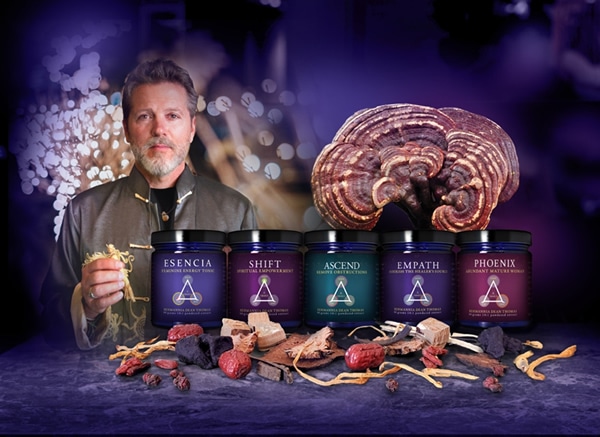
Escucha a Rehmannia compartiendo leyendas sobre hierbas y hablando sobre sus productos únicos.
Descarga nuestro MANIFIESTO GRATUITO sobre el Dolor Crónico.
Suscríbete a nuestro boletín para estar siempre al día con nueva información de salud, consejos sobre productos, podcasts, seminarios web y mucho más.
Podcast 427: Hierbas Súper Tónicas (antes Hierbas RDT)
MARTIN: Hola a todos, soy Martin Pytela para el podcast Life Enthusiast, y hoy tengo el placer de presentarles a Rehmannia Dean Thomas, el fundador y herbolario jefe de RDT Herbs. En Life Enthusiast hemos promocionado los productos Exsula Superfood durante mucho tiempo, desde 1989, y hemos incluido hierbas chinas en ellos como componentes desde los primeros días. Hemos decidido unir fuerzas con Rehmannia y mostrarles lo maravilloso que puede ser el enfoque herbolario chino. De todos modos, dejaré que Rehmannia les explique la historia de su vida con sus propias palabras porque es súper relevante. ¡Así que aquí va Rehmannia Dean Thomas!
REHMANNIA: Gracias, Martin, gracias por invitarme, y gracias por tu interés en mis productos y en mi conocimiento. Sé que tú también sabes mucho, así que siempre es agradable hablar con un camarada y difundir esta gran información en un momento tan valioso e importante para que la humanidad la entienda. Esto nos llevará a una comprensión más profunda de la salud holística, y a empezar a entender los valores de la alquimia, y a ir más profundo, básicamente, con todo lo que estamos haciendo a medida que el mundo se vuelve más y más peligroso. Creo que las hierbas tónicas nos llegan en un momento increíble.
MARTIN: Sí, de hecho, mientras dices esto, estoy pensando: ¡Oh, solo quiero decir tanto al respecto! Por ejemplo, desde 1996, he estado extrayendo las mías, y desde aproximadamente 2004, hemos estado vendiendo ORMUS al mundo, ¡y ahí estás tú, vendiéndolo y haciéndolo parte de tus hierbas! Es súper importante para mí porque no es muy conocido, no es muy comprendido y, sin embargo, marca una diferencia gigantesca en cómo impacta a las personas. Y lo segundo es mi amor por la Medicina Tradicional China, que esto no es, pero es parte de ella.
REHMANNIA: Sí.
MARTIN: En el sentido de que he tenido el mayor éxito en salud, la mayoría de las reparaciones a mi cuerpo roto porque me rompí por toxicidad de mercurio y muchas otras cosas, las curaciones que me llegaron fueron en gran parte de personas que entendían el método chino, los conceptos. De todos modos, aquí está, por favor, cuéntanos cómo llegaste hasta aquí.
REHMANNIA: Es una historia bastante loca, bastante enrevesada. Soy de las afueras de Louisville, Kentucky, de un pequeño pueblo llamado Valley Station, así que el hecho de que las hierbas chinas llegaran a mí es una especie de milagro, pero ocurrió por muchos factores. Conocí a una mujer china cuando estaba de gira tocando música a los 21 años, y ella me introdujo a todo esto, y nos casamos, y fuimos a China de luna de miel. Casualmente fuimos a la provincia del norte de Manchuria, que es la región donde crecen las grandes hierbas tónicas chinas. Y allí fui testigo de cómo los recolectores recogían las hierbas del bosque, y observé la sacralidad que tenían por sus hierbas. Y luego me topé con un bazar nocturno, donde las hierbas se vendían a altas horas de la noche, y vi raíces de ginseng y hongos reishi por primera vez. Ella también quedó bastante impresionada con lo que vimos. Hay muchas granjas de hierbas allí, era casi como si supieran mi destino, de alguna manera me estaban preparando para entrar en el herbolario chino. Así que regresamos a América, vivíamos en San Francisco, y fuimos a Chinatown, y compramos un libro de un hombre llamado Ron Teeguarden, esto fue alrededor de 1986, y empezamos a hacer sus tinturas con Astrágalo y Ho Sho Wu, era más o menos al mismo tiempo que tú empezaste a hacerlo, ¿eh? Debe haber habido algún tipo de conciencia colectiva, ya sabes, ambos empezamos a hacerlo entonces. Y luego, en 1993…
MARTIN: …¡espera! No quiero pasar por alto esto, mencionaste al Sr. Teeguarden, es un ícono en la herbolaría estadounidense, y tuviste el placer de pasar años a los pies de un Gran Maestro, esto no es poca cosa, no es algo para pasar por alto, ¿verdad?
REHMANNIA: No, no lo es, porque nuestro linaje tiene una integridad muy, muy profunda. Hay ciertas cosas que simplemente hay que experimentar, no se pueden pasar por alto. El aprendizaje tradicional se considera un aprendizaje de ocho años con un maestro y un alumno. Como decía en 1993, regresé a Los Ángeles después de que mi exesposa me enseñara todo esto, y luego conocí al maestro herborista Ron Teeguarden, y me convertí en su aprendiz personal, y lo llamamos 'maestro del té'. Preparaba todos sus tés para sus clientes especiales, incluida su esposa, y durante ocho años, fui su compañero personal en Dragon Herbs, manejé su bar de elixires allí y atendí a todos sus clientes especiales. Y aprendí directamente de él, esa es la relación tradicional maestro-alumno, que ha existido durante más de 2000 años, probablemente unos 5000 años, en realidad. Me quedé asombrado y tan humillado y bendecido de haber podido estar junto a este gran maestro durante tanto tiempo. Y sí, creo que él me enseñó a mantener esta profunda integridad que pretendo defender el resto de mi vida.
MARTIN: ¡Así que, desde los tés hasta la comprensión de las hierbas y cómo encajan, ¿verdad?
REHMANNIA: Sí. Esa es la clave de la brillantez de la Materia Médica China, que, como he dicho, tiene unos 5.000 años. La primera Materia Médica fue escrita, según los chinos, en el año 2975 a.C. Esto marcaría el primer documento escrito sobre hierbas. Fue escrito por un hombre llamado Shen Nong, por lo que es el padre de nuestro linaje, pero en realidad este libro probablemente fue escrito por miles y miles de hombres y mujeres durante muchos años antes de eso porque el conocimiento que contiene no pudo haber sido acumulado por una sola persona. Así que en los años modernos, las autoridades sanitarias chinas veneran enormemente su sistema médico de MTC, y lo protegen. Volveremos a hablar de eso, pero investigaron la Materia Médica de Shen Nong y descubrieron que casi toda la información era correcta.
¿Cómo sabían estas personas, en el 3000 a. C., a qué meridiano de órganos van estas hierbas, y todo esto? También han diseñado y ya han reclamado las tres energías primarias llamadas los Tres Tesoros, sobre las que espero que elaboremos un poco, todo eso está en el libro. El libro describía tres clases de hierbas. La clase superior se llama hierbas tónicas, y eso es con lo que trabajamos, tú y yo, y algunas otras personas que están aprendiendo herboristería tónica. Las hierbas tónicas son la clase superior en la Materia Médica China, debido a tres criterios. Uno: van a más de un sistema de órganos y los benefician, como el hígado y el hueso, el riñón y el corazón, o el bazo. Así que una hierba tónica tiene que beneficiar a más de un sistema de órganos, y tiene que tener lo que llamamos Energía Bidireccional. En otras palabras, tiene energía equilibradora.
Y esto encaja con el nombre 'hierba tónica'. 'Tónico' es una palabra griega que significa 'afinar las cuerdas de un instrumento en armonía'. Así que lo que intentamos hacer es equilibrar estas dos fuerzas llamadas Yin y Yang. Se descubrió que las hierbas tónicas ayudaban a equilibrarlas. Y luego el tercer criterio de una hierba tónica es que debe ser completamente segura para todas las personas. Decimos mayores de cinco años, pero probablemente incluso más jóvenes, pero somos cuidadosos con eso. Así que todas las personas mayores de cinco años. Una fórmula herbaria tónica correctamente construida y utilizada sabiamente debe ser buena para todas las personas. Ese es el criterio de una hierba tónica, y eso es con lo que trabajamos. Así que, en realidad, las hierbas tónicas se consideran una clase de superalimentos. Todas las personas en la Tierra pueden tomarlas y beneficiarse. Sin embargo, la filosofía detrás de su uso es lo que más fascina.
MARTÍN: ¡Exacto! Bien, entonces, aquí estás en Manchuria, aprendiendo cuán sagrada es esta región, cuán bien la gente trata el suelo, el agua, el aire, el terreno, el terruño, si se quiere. Quiero dejar constancia de que China se ha ganado una bastante mala reputación por algunos de los abusos al medio ambiente que ha cometido.
REHMANNIA: Sí.
MARTÍN: Pero no aquí.
REHMANNIA: Esa es la clave. Es genial señalar esto, Martin, para que la gente entienda. Los chinos consideran la MTC como un regalo para el mundo. Se remonta a lo que ellos llaman historia salvaje, que podría remontarse hasta 20.000 años. El gobierno chino hoy en día protege realmente este sistema de medicina y lo considera un regalo para el mundo, por lo que están protegiendo las regiones donde crecen estas hierbas. Y a medida que la propaganda se acumuló en Occidente, de que los productos chinos están contaminados, y posiblemente algunas de las hierbas también lo estén. Los chinos contrarrestaron esto con medidas activas. Pero en la provincia de Manchuria, donde las hierbas evolucionaron tradicionalmente, las leyendas al respecto son tan antiguas que fueron a esas regiones, las acordonaron y las convirtieron en Reservas de la Biosfera de la ONU. Las Naciones Unidas las supervisan con el gobierno chino. Y estas biosferas son lugares prístinos, donde no se permiten productos químicos. En América, nuestros cultivos orgánicos pueden ser rociados, pero allí, tienes un radio de cien millas que no se puede tocar. Y ahí es donde se recolectan las hierbas de la naturaleza. A menudo no son orgánicas porque los recolectores campesinos de allí no pueden permitirse cumplir con los protocolos del sistema orgánico, pero los he observado, he estado allí, estas personas entran y recolectan en la naturaleza, y luego caminan hacia atrás, y de hecho arreglan los caminos por los que caminaron.
MARTIN: Sí, en nuestro mundo de los Superalimentos Exsula, tenemos la misma idea. Usamos muchas cosas recolectadas en la naturaleza que no califican para la certificación orgánica, porque para ser certificado orgánico, en realidad tienes que cumplir con un método industrial.
REHMANNIA: ¡Exactamente! Nunca podemos garantizar un producto, pero sí hacemos control de calidad. Y es mi trabajo, y tu trabajo, Martin, como personas a las que les importa, y personas que desean mantener la integridad, nunca permitirnos asociarnos con algo que esté contaminado. Nosotros nos encargamos del abastecimiento, para que el cliente pueda venir a nosotros con esa seguridad, pero al mismo tiempo, es realmente importante hoy en día investigar de dónde se obtienen las hierbas. Como cualquier cosa, hay hierbas chinas contaminadas, pero si entras en una tienda de hierbas chinas, a veces encontrarás como tres contenedores de la misma hierba, digamos que tenemos Dong Quai, encontrarás uno por 6.99, otro por 9.99, otro por 15.99. Bueno, simplemente compra el de 15.99, sabes que estás obteniendo ese material que estaba en las montañas, esas regiones prístinas que llamamos Din Gao, el lugar de origen biológico. El gobierno chino está elaborando un programa de certificación para poder poner una etiqueta en el producto para que esté certificado. Y así es como todo lo demás, pagas por lo que recibes.
MARTÍN: Hmm. Según mi entender de las plantas, son esencialmente concentradores. Extraen del medio ambiente energías específicas y minerales específicos y los combinan para crear compuestos específicos, típicamente alcaloides o pigmentos, y cada planta crea una combinación diferente. Así que, en primer lugar, tiene que estar en el suelo para que lo absorba, pero en segundo lugar, es la planta adecuada con el sol, el clima, el viento y todo eso adecuados, lo que hace que desarrolle estos compuestos que un farmacéutico envidiaría. ¡No pueden hacerlo en un laboratorio, la naturaleza lo hace!
REHMANNIA: ¡Sí, la naturaleza lo hace! ¡Y la sinergia ahí! Es decir, ¿por qué manipularla? ¿Sabes?, si encontramos una planta, como una hierba tónica, que es terapéutica, no hay necesidad de extrapolarla de alguna manera, ¿sabes? Ya es algo en su plenitud y completitud de tu madre naturaleza. Pero sobre ese tema, sabes que los alimentos y las hierbas se clasifican de manera diferente porque los alimentos suelen cultivarse a partir de una semilla, y los llamamos cultivares anuales, lo que significa que pones la semilla en la tierra, y unos meses después, sacas el tubérculo, o la hoja, o la flor, o el brote, o el tallo, y eso es lo que comes. Todavía está suculento y masticable. Pero si dejases esa planta en la tierra, los elementos invasores la invadirían, sus azúcares se convertirían en almidón, la naturaleza la invadiría. Y eso es porque ha sido sobrecultivada por los humanos.
Las hierbas son diferentes, se les llama plantas perennes. Así que ahora tienes esta pequeña hierba que está creciendo, esta pequeña primavera que apareció en medio del desierto de Mojave, y aquí llega el invierno, así que la genética de esta planta tiene incorporado el desarrollo de protección contra los elementos invernales. Ahora viene la lluvia y el frío, la genética de la planta construye protección y adaptabilidad a todo eso, y los constituyentes vitales de la planta se vuelven mucho más complejos. La gente me ha preguntado: "Bueno, ¿no podemos simplemente comer esa planta cruda? ¿No sería mejor?" Bueno, la cuestión es que una vez que la planta se ha vuelto perenne, su celulosa se endurece, como la madera, a esto lo llamamos lignano. Ahora los jugos de la planta y sus medicinas están encerrados dentro. Y hace mucho tiempo, una persona brillante descubrió que si hervían esto en una olla y lo bebían, podían obtener la esencia. Y lo que encontramos es que estos adaptógenos que ayudan a esta planta a adaptarse a todo el clima y los cambios por los que debe vivir año tras año, esos componentes se llaman 'extremófilos', y sobreviven al proceso de ebullición, y en realidad se desbloquean, por eso nuestras hierbas se vuelven tan importantes, con un complejo cuerpo de elementos involucrados.
MARTIN: Lo que quiero decir aquí es que la dureza del ambiente y tener que superar lo que sea que tenga que superar… Es decir, Manchuria no es un paraíso, es un lugar duro, hace frío allí arriba, la planta es resistente y evoluciona bajo el estrés, crea y construye estos potentes biológicos. Rehmannia, hay muchas leyendas que discuten o describen cómo se empezaron a usar estas hierbas. ¿Puedes contarnos algunas de estas cosas?
REHMANNIA: ¡Sí! En China y en la India, el herbolario se remonta muy atrás. Los chinos, en lo que ellos llaman "historia salvaje", creen que su herboristería en realidad tiene su origen alrededor del 20-30.000 a. C. Esto sucedió cuando se supo por primera vez que los humanos migraron a esta región de la que hablamos, llamada Manchuria, China, que se encuentra en la parte norte de China, rodeada por Corea del Norte, Mongolia y Rusia. Esta es un área muy limpia y prístina de la que hablamos. Ahora, los humanos llegaron allí alrededor del 20-30.000 a. C. La razón por la que no llegaron antes fue porque hay una montaña gigante allí llamada Monte Changbai. Se puede ver esto en la frontera entre Corea del Norte y China. Cuando sigues la frontera, esta se adentra en China. Hay una montaña volcánica gigante con nieves blancas y un gran lago en medio de la nada. Esta montaña está rodeada de montañas boscosas indígenas de cordilleras anteriores, son similares a nuestras montañas Apalaches.
De repente, alrededor del año 800 d.C., este volcán explota y arroja estos minerales diamagnéticos increíblemente poderosos por toda la Tierra desde las profundidades, y luego, a medida que ese polvo se asentó y se volvió fértil, allí evolucionaron plantas específicamente poderosas. Se convirtieron en hierbas tónicas. Ahora bien, los humanos llegaron allí alrededor del 30.000 a.C. Las leyendas dicen que descubrieron estas hierbas. La primera leyenda conocida es que la gente vivía alrededor del monte Changbai y vio a un ciervo fracturarse una pata. En aquellos tiempos salvajes, si un ciervo se fracturaba una pata, básicamente estaba perdido, pero se vio a este ciervo yendo a masticar la corteza de cierto árbol. Siguieron y rastrearon a este ciervo, y vieron cómo se curaba su fractura ósea. Fue asombroso. Así que cuando alguien de su clan se fracturó un hueso, dijeron: "Bueno, vamos a hacer lo que hizo ese ciervo", y fueron al árbol, tomaron un poco de corteza y la administraron, y el hueso de la persona sanó más rápido. Escribieron esto en un trozo de bambú, y así fue como empezó todo esto aparentemente. Así que esto podría remontarse hasta el 20.000 a.C.
Para validar esa teoría de la fecha, el gobierno chino ha permitido recientemente que se excaven tumbas en la zona. El pueblo chino era algo parecido a los nativos americanos, no querían que se excavaran sus tumbas, hasta hace poco, así que el gobierno chino lo permitió. Entraron en estas tumbas y encontraron restos carbonizados de fórmulas herbales que habían estado bebiendo como té, del 20.000 a.C. Sabemos que esto se remonta muy atrás. Hay otra leyenda que comenzó, había gente viviendo por allí que tenía cabras, y veían que cada año, justo antes de la temporada de apareamiento, las cabras iban a cierto árbol y forrajeaban las hojas, y entraban en su frenesí de apareamiento. Así que lo llamaron 'hierba de cabra cachonda'. ¡Ya lo hemos oído antes! Su nombre farmacéutico es Epimedium, su nombre chino es 'yin yang huo', y esta es una de las hierbas más antiguas que se conocen en la historia de la humanidad, en realidad es una hierba muy saludable. Se usa en fórmulas de fertilidad, y está en mi fórmula llamada Amorata, y también en mi fórmula llamada Embrace.
Así que estas hierbas se llaman hierbas Yang, y las emanaciones, eso era lo que la gente necesitaba en aquellos días, para escalar las montañas o para huir de un animal salvaje. Y así no estaban enfermos todavía. Lo que estaban aprendiendo a hacer era sobrevivir en la naturaleza, y necesitaban poder escalar esas montañas cuando fueran viejos. Así que con el tiempo, estas leyendas crecieron, de que había inmortales que vivían en las montañas, que tomaban las hierbas, y habían aprendido tanto sobre las hierbas, que habían desafiado la edad, y eran inmortales, simplemente vivían allí. Las leyendas dicen que estos inmortales todavía viven allí hoy, y pueden volar. Se sintonizaron tanto con la naturaleza, que literalmente pueden elevarse y volar. Se les llama Inmortales Celestiales. Aparentemente todavía se les ve de vez en cuando, volando alrededor del Monte Changbai, se convirtieron en los personajes legendarios de nuestro linaje, porque habían encontrado todas estas hierbas que les dieron su inmortalidad. Entonces lo que sucede es que el emperador sube, y están construyendo el palacio Imperial allí abajo, y yo siempre me imagino a un par de estos inmortales sentados en la montaña, mirando esto y diciendo: "Hmm, creo que puedo ver a dónde va esto". Y así lo que les pasó a estos emperadores y emperatrices fue que estos inmortales que vivían en las montañas les intrigaron, así que querían ser inmortales. Los emperadores y emperatrices dijeron: "Oye, vamos allí y encontremos a esos hombres y mujeres".
También hay muchas leyendas de mujeres inmortales. El emperador envía legiones a buscar a estas inmortales y encontrarlas. En un caso, un emperador encuentra a una mujer, la lleva al palacio imperial y la convierte en la médica de la corte, y una línea de ellas se convirtió en los médicos de las cortes, y se suponía que debían poder inducir la inmortalidad. Pero se desviaron un poco y fueron conocidos como alquimistas, astrólogos y otras cosas que hacían, y eran los médicos de la corte. Otra gran leyenda es que se estaba construyendo el primer palacio imperial, y habían instalado una viga en el techo del dormitorio del emperador, justo encima de la cama, y de esa viga, creció un hongo. Y dijeron: "Oh, mira eso, es un augurio auspicioso, debemos dárselo al emperador". Así que el emperador comenzó a tomar este hongo, que era reishi, que en chino se llama Lin Zhi, y el emperador lo tomó como parte del protocolo de ser emperador. Este hongo se asocia con el liderazgo benévolo en muchas de las dinastías, los líderes eran benévolos, particularmente la dinastía Tang, hubo un período increíble de auge del arte, la cultura y la ciencia. Vea el libro El Genio de China de Robert Temple sobre todas sus invenciones.
Todos los emperadores de estas dinastías usaban estas hierbas. La schisandra fue descubierta como una hierba de belleza. Quan Yin bebe schisandra de un vial en muchas de sus representaciones. A lo largo de la historia china, los emperadores y emperatrices querían tener su inmortalidad y su belleza, por lo que buscaban estas hierbas. Si alguien encontraba, incluso de las clases bajas, si encontraba una hierba que iba a ayudar con la salud general, podía llevarla a un comité de la corte imperial y presentarla, si pasaba una prueba, y si se descubría que era realmente terapéutica, a toda la familia de esa persona se le daría el honor. Así que había toda esta gente, en su mayoría hombres jóvenes, buscando hierbas y haciendo toda esta alquimia para encontrar hierbas que pudieran ayudar al emperador, eso fue lo que impulsó todo esto, y por eso la longevidad es la raíz de todo. La gente no estaba realmente enferma todavía, no tenían todas esas enfermedades en aquellos primeros días, porque la tierra era pura. Se buscaba más la longevidad y la belleza. Ningún emperador quemó jamás libros sobre hierbas, sobre un sistema médico, estuvo en constante desarrollo todo este tiempo. Los emperadores quemaron libros sobre obscenidades, pornografía y esas cosas, pero no quemaron los libros médicos. Así que en los tiempos modernos, el gobierno chino ha sido muy, muy instrumental en la protección de todo esto.
MARTIN: Decías algo sobre la extracción, ¿verdad? Así que esto es esencialmente una extracción de té, hervida en agua.
REHMANNIA: Sí. Ok. Soy vendedor de extractos chinos en polvo, como los llamamos. Lo que hicieron los chinos fue encontrar formas de hervir las hierbas en esta gran olla a presión, y luego, después de que su té se cocina a tiempos y temperaturas muy específicos, se añaden otras hierbas, hierbas más delicadas, como la schisandra, por ejemplo. Después de que todo se hace bajo presión, liberan una válvula y el té súper hirviendo sale disparado bajo presión y va a un tanque, y hay un giroscopio giratorio con aberturas muy pequeñas, y el té sale a tal velocidad que simplemente hace 'puf' y se convierte en polvo, y eso es lo que se llama 'secado instantáneo'. Y luego ese polvo cae y hay una escotilla cónica allí abajo, ponen una bolsa debajo, abren la escotilla y lo meten. Así que lo que obtienes es un té que ha sido cocinado para ti, pero secado instantáneamente, y cuando lo ponemos en el agua caliente, se diluye inmediatamente, nos hace la vida muy fácil. No tenemos que tener una bolsita de té y remojarla durante 10 minutos, en realidad es más fácil de hacer que una taza de té normal o una taza de café.
MARTIN: Así que esto es en realidad como el café instantáneo, donde se disuelve, y es todo café que alguien hizo y luego secó, y puso en una bolsa, ¿verdad?
REHMANNIA: Es lo mismo, secado instantáneo.
MARTIN: Entiendo que esto está concentrado a 10 a 1, ¿verdad?
REHMANNIA: Sí. Lo que pasó fue que en 2007, cuando decidí empezar a vender extractos en polvo a granel, todo en ese momento tenía hasta un 500% de maltodextrina. Por ejemplo, si comprabas una botella de cápsulas de reishi, costaba unos 20 dólares, y le ponían mucha maltodextrina para rebajarlo porque no podían obtener ganancias con 20 dólares. Y ese fue el mercado en el que entré en 2007. Y encontré un proveedor que decía que tenía el extracto puro que no estaba cortado con maltodextrina, y yo dije: "¿Qué es eso?". Y él dijo: "Consideramos que es un extracto 10:1, lo que significa 10 libras de materia prima extraídas hasta una libra de polvo". Y yo dije: "¿Puedo comprarlo así? ¿Por qué lo ofrecen, este extracto puro 10:1?". Y ellos dijeron: "¡Porque puedes decirnos qué maltodextrina quieres! Maíz, arroz, cuánto quieres, 100%, 200%...". Yo dije: "¿Qué tal nada?". Y ellos dijeron: "Bueno, así no se puede ganar dinero". Y yo dije: "No me importa, dame 10 kilos", y lo compré.
Y fui a la conferencia Longevity Now en 2009 con un pequeño frasco de polvo de reishi, extracto de polvo de reishi 10:1, y esa fue la introducción de esto en el mercado por lo que sé. Y luego algunos de mis compañeros sacaron productos similares. Pero estoy muy orgulloso de eso, estoy orgulloso de haber dejado fuera la maltodextrina. La excusa de la industria para incluir maltodextrina es porque las hierbas pueden endurecerse en las cápsulas y en el frasco. Pero lo que hice fue idear un proceso para añadir un poco de extracto de bambú, que es muy rico en sílice. ¿Conoces esos pequeños paquetes de sílice que la gente pone en los frascos para absorber la humedad? Eso es realmente sílice. Así que pensé que simplemente añadiría un pequeño porcentaje de bambú para evitar que se endureciera, y ha sido muy útil.
MARTIN: Sí, de hecho, hacemos un producto con tabashir, el extracto de bambú, que es súper importante porque ayuda al cuerpo a construir tejido conectivo fuerte.
REHMANNIA: Sí, ¡la sílice es muy importante como elemento!
MARTIN: Sí. ¡Ok! ¿Entonces el uso es qué? ¿Tomar media cucharadita de la mezcla, o tres cuartos de cucharadita de la mezcla?
REHMANNIA: Tres cuartos de cucharadita es una cantidad terapéutica para un día, puedes tomarla una o dos veces al día. Y como dije antes, las hierbas tónicas no se consideran un medicamento, simplemente te construyen lentamente, te sientes más adaptable al estrés, más resistente a los elementos. Podemos ayudar a tu metabolismo, podemos ayudar a tu alquimia mental, podemos ayudar a tu sensación de paz. Es increíble.
MARTIN: De hecho, has creado la línea con 15 o 16 mezclas específicas, las enumeramos todas en nuestra tienda. Intentemos describir cuándo y cómo usar una u otra.
REHMANNIA: Una de mis fórmulas básicas más populares que me encantaría que todo el mundo tuviera es Awaken. Esta fórmula contiene las principales hierbas adaptogénicas del mundo. Mencioné los adaptógenos antes, y la mayoría de estas hierbas tónicas tienen propiedades adaptogénicas, pero hay hierbas tónicas específicas que han sido denominadas adaptógenos porque su genética y química vital han aprendido a ser tan adaptables. Por ejemplo, la Rhodiola Rosea, esta planta soporta increíbles diferencias intensas en el clima cada día. Y sus adaptógenos son tan profundos que en 1947, el Dr. Lazarov, un médico ruso, recibió el encargo de ir a observar a la gente que vivía en esta región del norte de China porque estas personas sobrevivían a inviernos increíblemente duros. El médico y su equipo subieron allí y descubrieron que estas personas tomaban Rhodiola, a la que llamaban Raíz de Oro. Luego la llevó de vuelta a Moscú y descubrió que en realidad era Rhodiola Rosea, a la que le puso ese nombre porque huele a rosas, es un olor hermoso. Y le hicieron pruebas y descubrieron que tenía este efecto de equilibrar nuestros ritmos circadianos y ayudar a nuestras glándulas suprarrenales a adaptarse al estrés. Y así Lazarov acuñó el término 'adaptógeno'. También estaba estudiando el ginseng siberiano al mismo tiempo (ahora llamado Eleuthero), y esas dos hierbas fueron los primeros adaptógenos reconocidos. Luego los chinos lo observaron y encontraron otras hierbas adaptogénicas como el astrágalo, la schisandra, el reishi... Así que mi fórmula Awaken contiene las principales hierbas adaptogénicas de todas. Gynostemma, Astrágalo, Rhodiola, Eleuthero. Y en esta fórmula pongo Melena de León con Polygonatum sibericum. Considero que esta es 'una fórmula para pensadores y multitareas'. Es ideal para estudiantes, para personas que se preparan para una entrevista, ya sabes, toma un poco de Awaken por la mañana, es una gran alternativa matutina a lo que la gente suele beber por la mañana.
MARTIN: Así que es esencialmente el universal "adiós, café".
REHMANNIA: Sí, y lo sorprendente es que sabe realmente bien. Lo pones en una taza de agua caliente, tal vez añades un poco de leche de nueces y miel, si quieres. Es fenomenal por la mañana para mantenerte activo durante el día y para reponer tus glándulas suprarrenales. Sabes cuánto agotamiento suprarrenal está arruinando la salud de nuestra sociedad de muchas maneras, haciéndonos tan vulnerables al estrés, impidiéndonos vivir nuestra emoción, nuestra alegría y nuestra aventura. Así que estas hierbas adaptógenas realmente nos ayudan a ponernos esa nueva camiseta de aventura. "Salgamos a escalar esa montaña" o "Quiero hacer esa nueva pintura".
MARTIN: Quiero intervenir aquí solo para enfatizar o realzar el punto de que el adaptógeno no es que la planta sea adaptable. Es que lo que hay en la planta te ayuda a adaptarte a los estreses de la vida. Eleva lo que está bajo y baja lo que está demasiado alto. Te ayuda a afrontar el mundo mejor de lo que lo has afrontado antes. Ese es el punto del adaptógeno.
REHMANNIA: ¡Y qué momento tan increíble para que estemos escuchando esto! Sabes, Hans Selye, el tipo que acuñó el término "estrés", dijo que ningún organismo, al menos los mamíferos, puede adaptarse al estrés constante. No estamos hechos para eso. Estamos hechos para reaccionar a los desencadenantes de estrés agudo, y luego poder reírnos y descansar. Ahora, estamos bajo este estrés constante. Lo que dicen las autoridades sanitarias chinas, lo que dicen los grandes maestros de nuestro linaje, es que cuando estamos bajo ese estrés, estamos perdiendo nuestra energía vital. Esta energía se llama Jing. Es nuestra energía heredada de nuestros ancestros, es energía epigenética. Y las glándulas suprarrenales son la válvula que nos permite usar parte de eso cuando estamos bajo estrés, estamos usando parte de ese Jing. Pero lo que sucede cuando estamos constantemente bajo estrés es que lo estamos perdiendo, y estamos envejeciendo, nos está causando envejecimiento. Las hierbas adaptogénicas ayudan a tapar las fugas y nos ayudan a rellenar este manantial de nuestra vitalidad que son nuestros riñones. Y cuando nuestros riñones están fuertes y llenos de esta energía, envejecemos con gracia, juventud y adaptabilidad, y parecemos curiosos, todavía estamos interesados en la vida a medida que envejecemos. ¡Este es un gran regalo!
MARTIN: ¡De hecho! Así que Awaken debería estar en el armario de todo el mundo.
REHMANNIA: Sí. Profundizando un poco más en el Jing, mi fórmula llamada Eternal Jing contiene todas las mejores hierbas que tonifican el yin, nutren los riñones y nutren las fuerzas de la longevidad. Se lo vamos a pasar a nuestros hijos, es realmente importante reconstruir esa salud, si realmente queremos experimentar emoción y aventura en nuestras vidas, y sentir que incluso al final de nuestras vidas, somos felices y robustos, y tal vez incluso pasemos por este mundo sin enfermedades. Las hierbas tónicas van a los riñones y nos ayudan con esta resiliencia. Así que Eternal Jing es mi fórmula de las mejores hierbas del mundo. Una fórmula maravillosa, maravillosa. Reishi, Ho shou wu, Rehmannia, Astrágalo, Schisandra.
MARTIN: Muy bien. No creo que debamos tomarnos cinco minutos en cada una de las mezclas, porque esta charla sería interminable, pero solo quiero destacar que habrá algo para las personas que se sienten con bajo rendimiento en el departamento de la libido, hay algo para la salud circulatoria y el estado físico... ¡continúa tú!
REHMANNIA: Sí. Siempre pienso en la economía. ¿Cómo podemos incluir la mayor cantidad posible para facilitar las cosas a la gente? Así que para las mujeres en edad reproductiva, para ayudar a construir, tonificar su sangre, nutrir el Chi, para un buen control de peso y un buen metabolismo, creé esta fórmula para la belleza y la fertilidad, y se llama Esencia. Es una gran fórmula para mujeres jóvenes en sus años reproductivos. Y luego, para las mujeres que están comenzando a pasar por los cambios de la perimenopausia y más allá, creé una fórmula llamada Phoenix, que es mi fórmula más popular, y ayuda con el apoyo hormonal, ayudando a la progesterona, la densidad ósea, la fuerza espiritual, esta es una fórmula muy popular. Y luego, para los hombres, tengo una llamada Endurance. Para cualquier atleta, esta es una gran fórmula, tiene cordyceps, todas estas maravillosas hierbas. Y luego tengo hierbas para el espíritu. Lo que me encanta de nuestro linaje es que ponemos énfasis en nuestra salud, pero también en dónde estamos espiritualmente, ¿cómo nos sentimos en nuestras vidas? Y así creé una fórmula llamada Shift, que es probablemente mi favorita de todas mis fórmulas. Esto es increíble para una mente tranquila y la evolución del espíritu.
MARTIN: Creo que necesitamos enviar un barril de eso a la Casa Blanca.
REHMANNIA: (riendo) Sí, sí, ¡ese hombre está bajo mucho estrés ahora mismo!
MARTIN: Bueno, ya sabes, solo estoy pensando en general, la gente que bebe estos tés probablemente actuará de una manera un poco más ecológica, ¿verdad?
REHMANNIA: Sí. Lo que pasa con el hongo reishi, como dije antes, se llama la hierba de la inmortalidad espiritual. También se le llama un puente entre la tierra y el cielo. Nos reconecta con la totalidad de todo. Y ahí es donde creo que los humanos necesitan ir ahora, al entrar en una nueva era, que asocio con el chakra del corazón, devolviendo al planeta lo que tomamos. Hemos estado en una conciencia de tercer chakra durante los últimos 150.000 años, que es quemar y consumir sin pensar. Ahora estamos evolucionando hacia la energía asociada con el corazón. Así que el reishi tiene cinco colores diferentes, pero el que se nos muestra en todo el mundo ahora mismo es el rojo, que los chinos siempre asociaron con el corazón, se llama 'Ganoderma lucidum', su nombre es por su superficie brillante, pero siempre me gusta pensar que aporta lucidez. Esta hierba es una hierba increíble para tener durante esta evolución, para reconectarnos con la tierra, que es lo que debemos hacer para sobrevivir al futuro que se avecina. Debemos hacerlo por el bien de nuestros hijos, es nuestra obligación ayudar a nuestros hijos. El hongo reishi es una clave que nos llega para abrirnos de nuevo. El mecanismo del Reishi es que su micelio se extiende en la fuente, y su cuerpo fructífero es su aparato sexual. Cuando lo tomo, siento que me estoy miceliando de nuevo en el medio ambiente.
MARTIN: Oh, ¿quieres decir como volver a la conexión con la naturaleza?
REHMANNIA: Sí. Es un gran regalo tener eso para nosotros ahora.
MARTIN: ¡Así es! ¡Bien! ¿Entonces los frascos vienen en 90 gramos o tres onzas, lo que sería como 30 porciones?
REHMANNIA: Sí. Debería ser suficiente para aproximadamente un mes. Una persona siempre puede tomar más. Mi gran avance ocurrió cuando tomé mucho reishi. Recuerdo que en el frasco decía tomar 9-12 cápsulas al día, yo tomé 15. En realidad, la cantidad indicada en el frasco es una buena proporción terapéutica para tomar. En otras palabras, puedes tomar dos tazas al día si quieres, no debería ser un problema.
MARTIN: ¿Se pueden mezclar y combinar? ¿Puedes decidir tomar solo dos, tres o cuatro de ellos al mismo tiempo?
REHMANNIA: Gracias por esa pregunta, me alegra que no la hayamos pasado por alto. Las hierbas tónicas, me gusta pensar en ellas como una gran barra de ensaladas, en realidad. Sabes, si vas a la barra de ensaladas, no solo vas a tomar rábano y rúcula, sabes, vas a tomar muchos tipos diferentes de ingredientes, y las hierbas tónicas se pueden tratar así. Mientras tengamos un Alquimista como tú o yo para ayudar con un poco de guía, la gente lo entiende muy rápido. Una fórmula como Awaken se puede tomar con cualquiera de las otras fórmulas, Esencia, Endurance, Shift. Tengo una fórmula llamada Embrace que es para que la compartan los amantes, pero también es un tónico antienvejecimiento para fortalecer los riñones que podrías mezclar con Allure, la fórmula de belleza, y tendrás una combinación increíble.
MARTIN: Estoy pensando que algunas serían mejores para tomar en la primera parte del día, y otras en la última, ¿verdad?
REHMANNIA: Bueno, las hierbas tónicas son excelentes por la mañana para empezar el día. Las fórmulas adaptógenas, como Awaken, pueden tomarse por la mañana y por la noche porque uno de los mecanismos de una fórmula adaptógena es que funciona con tu ritmo circadiano. Así que en realidad te ayuda a relajarte por la noche.
MARTIN: ¡Genial! ¿Qué piensas, he omitido alguna pregunta importante o lo hemos cubierto todo?
REHMANNIA: ¡Yo diría que estamos bastante bien!
MARTIN: ¡Vale!
REHMANNIA: Sé que a los dos se nos ocurrirá algo después de terminar. (riendo)
MARTIN: ¡Por supuesto que sí!
REHMANNIA: Pero no queremos abrumar a nuestros espectadores, ¿sabes?
MARTIN: Sí, no quiero decir tanto que se aburran. Quiero decir lo suficiente para que se interesen e inspiren a investigar más a fondo. Este trabajo representa toda una vida de investigación y toda una vida de comprensión. Cuando uno empieza como aprendiz, va captando pequeñas cosas y se pregunta: "¡Me pregunto qué hará esto!". Lo que se obtiene aquí con esta línea de hierbas es la experiencia de un maestro transmitida a otro maestro, transmitida a otro maestro y presentada de tal manera que dice "estas cosas juntas funcionarán mejor que si simplemente vas a la despensa y coges algo al azar de la estantería".
REHMANNIA: Es muy cierto. He dado conferencias antes, y he usado esta analogía: Las hierbas tónicas son tan emocionantes que cuando la gente las descubre por primera vez, dicen: "¡Dios mío, esto es increíble!" ¡Y obtienes mucho! Y luego dices: "¡Quiero contárselo a todo el mundo!". Un año después, todavía estás trabajando en ello, tal vez estés estudiando con un maestro, y un año después dices: "Vaya, realmente me estoy metiendo en esto. Esto es asombroso. Nunca supe lo profundo que es esto". Dos años después dices: "¡Dios mío, esto es tan increíble, tengo que contárselo al mundo!". Cuatro años después y así sucesivamente... y al octavo año dices: "¡Mmm!" y ahí es cuando lo entiendes.
MARTIN: Lo que intento decir es que estas combinaciones no son solo ideas al azar, han sido probadas durante muchas generaciones, están bien pensadas. Y cuando tomes estos productos, es muy probable que te sientas suave, pero firmemente, impulsado en la dirección correcta.
REHMANNIA: Sí, absolutamente. Cuando se toman junto con una dieta saludable, estas hierbas serán milagrosas para ayudar a equilibrar tu vida y abrirte al potencial de la vida.
MARTIN: Así es. Bien, soy Martin Pytela, y Rehmannia Dean Thomas, maestro herbolario de la tradición china. Somos Life Enthusiast. Pueden contactarnos en www.life-enthusiast.com, toda esta línea de productos está bajo Super Tonic Herbs, y siempre pueden contactarme por teléfono al (866) 543 3388. Muchas gracias por estar aquí con nosotros.


