Amino Acids Provide Fundamental Building Blocks for Life
These 20 amino acids provide the fundamental building blocks from which all human life is constructed. The entire DNA is written using a code of only 4 letters, namely T-Thymine, A-Adenine, C-Cytosine and G-Guanine. First, DNA is transcribed into long strands of Messenger RNA by using the above four letters in groups of three, and these “Triplet Codons” contain the copied code. The sequence of these triplet groups represent chain specific amino acids found in various enzymes and proteins.
  |
|
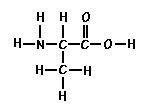
ARG -Arginine: An aliphatic molecule, made up of a long linear chain of atom  s that s thatare mostly carbon. Polar, water soluble molecule with a hydrophilic (water loving) side chain, it also carries a positive electrical charge. Being strongly hydrophilic, it is confined only to hydrated areas. Stimulates the immune system, promotes wound healing, and blocks formation of tumors. In the Anterior Pituitary gland, causes release of growth hormones. Increases spermatogenesis in sex glands. Also promotes detoxification of ammonia, and is involved in liver regeneration. |
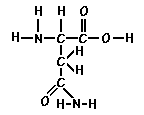  |
 ASP – Aspartic Acid: This Polar, meaning water soluble, molecule with a hydrophilic side chain, and in this instance is negatively charged. Being an aliphatic molecule, it is made up from a linear chain of carbon atoms. Nitrogen derived from Aspartic Acid is used to form ribonucleotides, precursors to RNA and DNA. Aids in the disposal and detoxification of ammonia in the body. Also increases overall resistance to fatigue. |
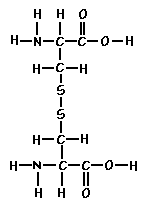  |
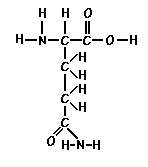
 GLU – Glutamic Acid: Also known as glutamate, this Polar molecule has a water soluble, hydrophilic side chain, which carries a negative charge. This aliphatic molecule is made from a linear chain of carbon atoms. Being strongly hydrophilic, is thus confined to only hydrated areas. Approximately 50% of the amino acid composition in the brain is represented by GLU and it’s derivatives. Used to transport potassium across the blood brain barrier. This amino acid acts as an excitatory neurotransmitter in the central nervous system, so is essentially fuel for the brain. Also found in stomach. |
  |
 GLY – Glycine: This simplest of all the amino acids is a Non-Polar molecule and is thus not water soluble. While essentially hydrophobic, is found to be less strictly segregated from water due to it’s small size. Helps in the formation of the purine skeleton utilized in constructing RNA and DNA strands. Inhibitory neurotransmitter in the central nervous system. Stimulates the release of growth hormone, and aids in synthesis of hemoglobin. Used as food additive for a sweeter taste, is also effective for hyperacidity in the stomach (used in antacids). |
  |
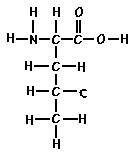
 ILE – Isoleucine: This is an Aliphatic molecule, made up of a long linear chain of carbon atoms. It is Non Polar, and thus not water soluble. A very hydrophobic amino acid, tends to be buried in regions from which water is excluded. It is found in high concentrations in muscle tissue. Since the only source is through dietary intake, it must be kept in balance proportion with other amino acids, or nutritional conflicts may occur. |
  |
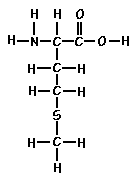
 LYS – Lysine: This Polar, water soluble molecule with a hydrophilic side chain, also carrying a positive electrical charge. An aliphatic molecule, it is made from a long linear chain of carbon atoms. Since being strongly hydrophilic, it is confined to only hydrated areas. Assures adequate absorption of the mineral calcium, and assists in promoting bone growth. Must be kept in balance with other amino acids through dietary intake, or nutritional conflicts may occur. Helps to form collagen, the fibrous protein constituent of bones, cartilage, tendons, and other connective tissues. Also used in treatment of Herpes Simplex. |
  |
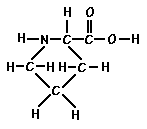
 PHE – Phenylalanine: Related to other organic groups containing rings of carbon atoms, this Aromatic amino acid has a side chain derived from benzene by removal of one hydrogen atom. Tending to be buried in regions where water is excluded, this Non Polar amino acid is not water soluble, and is a very hydrophobic. Used by the brain as a natural precursor to the manufacture of norepinephrine and other neurotransmitters, it enhances learning, alertness and memory. Also used in the treatment of depression, and the “D” form Phenylalanine acts as a pain killer. Nutritional conflicts may occur unless kept in balance with other amino acids through dietary intake. |
  |
|
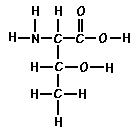
 SER – Serine: This Hydroxyl containing, water soluble Polar amino acid has a hydrophilic side chain, while carrying no electrical charge. An aliphatic molecule, it’s made from a short chain of carbon atoms. Although having a hydrophilic character, being electrically neutral also allows it to be accommodated in hydrophobic regions. Assist in the manufacture of the organic acid Creatine, found in blood, while also present within muscle and brain tissue as an energy source for muscle contraction. Participant in purine, pyrimidine and porphyrin biosynthesis. Also a natural moisturizing agent used in cosmetics. |
  |
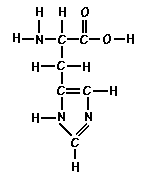
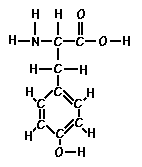
 TRP – Tryptophan: An uncharged, Polar molecule, with a water soluble hydrophilic side chain. A Heterocyclic molecule similar to other organic carbon compounds, in this case having a nitrogen atom in it’s rings. Essentially hydrophobic, but less strictly segregated from water owing to the possession of a polar (NH) group, and can participate in hydrogen bonding. Found in blood serum, gastric mucous membranes and especially in brain tissue, a precursor to Serotonin and used as an inhibitory neurotransmitter. Stimulates the smooth muscles, transmission of impulses between nerve cells, and in the regulation of cyclic body processes. Used in treatment of migraine headaches, insomnia and some types of depression. A balance must be maintained with other amino acids through dietary intake, or nutritional conflicts can occur. |
  |
 VAL Valine: This molecule is a Non-Polar amino acid, and thus is not water soluble. It is an aliphatic molecule made up from a short linear chain of carbon atoms. A Very hydrophobic amino acid, tending to be buried in regions from which water is excluded. Nutritional conflicts may occur unless kept in balance with other amino acids through dietary intake. Used to treat severe amino acid deficiencies caused by addictions. One of the branched chain amino acids found in high concentration in muscle tissue. |